

Photo: Robert Potokar
Uncategorized / Piranesi 52/53
Navje Memorial Park, Ljubljana, Slovenia, 1937/1938
Jože Plečnik
Space of Memory: Plečnik’s “Grove of the Deserving” in Navje
Navje Cemetery, Ljubljana – the city’s almost forgotten memorial space
There are not many places in the history of Ljubljana where urban morphology, national symbolism and subtle authorial gestures would be so densely intertwined in the design of a space of memory. The Navje Cemetery, however, is one such place. It is located north of the main railway station and east of the Baraga Seminary, along Robbova Street and Vilharjeva Road. It was established on the eastern edge of the former city cemetery, near St Christopher Church.
In the years 1937 and 1938, Plečnik transformed Navje into a “park of the deserving”, where the graves of great personalities of Slovenian culture are arranged in a rational geometry of paths, lawns and stairways. Nevertheless, Navje remained on the margins of research for a long time: due to its smaller scale, the partially implemented broader concept of the Slovenian Place of Glory, and the gradual erasure of the positive features of the landscape design due to urbanisation on the edges.
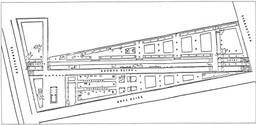
A few years ago, a conservation plan was drawn up due to the need for renovation, which analysed in detail the history of the development of the Navje area and, in particular, the alterations made by architect Jože Plečnik just before World War II. The most important findings of the research are the discovery of the original plan of the Arcades from 1865 and the detailed reconstruction of Plečnik’s actual park composition from 1937 to 1938. On this basis, the conservation plan sets out the criteria for authenticity, conservation priorities and operational guidelines for renovation and maintenance. The study places Navje among the key projects of Plečnik’s urban oeuvre and establishes a new benchmark for the research studies of immovable cultural heritage in Slovenia.

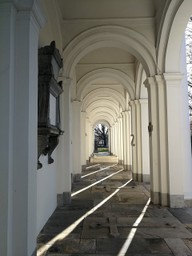
The methodology of the conservation plan for Navje was distinctly interdisciplinary and more extensive than is usually the practice. It included research in almost 20 public and private archives, with documents, photographs, cartography and film recordings, which provided a comprehensive insight into the development of the space.
Field probes of the parterre revealed the width, level and materiality of the paths, while those of the Arcades revealed 19th-century murals and the stratigraphy of the plasterwork, making it possible to distinguish Plečnik’s interventions from older phases. Arboricultural analysis assessed the vitality of the trees, the planting phases and the geometry of the vegetation, while architectural photographs documented the Arcades, portal, stairways, pillars and more than 90 gravestones.

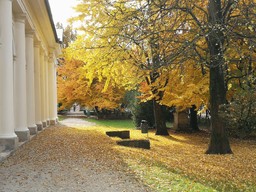
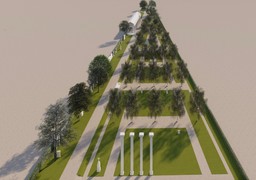
The methodology was supplemented by spatial analyses and a three-dimensional digital reconstruction from 1937 to 1938, which, in addition to documentation, served as a tool for verifying the spatial logic. This combination of sources, research and digital tools enabled an in-depth understanding of Navje as a complex landscape architectural monument.


To read the whole article, please order the copy of the magazine HERE.
The conservation plan for the Ljubljana Navje Cemetery was made by the STUDIO TSK OBLIKOVANJE KRAJINE Tanja Simonič Korošak s.p., with the following contributors: Dr Tanja Simonič Korošak (project leader), Dr Tina Potočnik, Miro Klajder MSc, Tanja Grmovšek, Smiljan Simerl, Tomaž Ebenšpanger, Čila Berden, Vladimir Čelebić Maša and Tica Merima.


Czech Republic
Architect Kamil Roškot and the Royal Tomb in Prague’s Cathedral

Slovenia
Ljubljana Castle, Ljubljana, Slovenia – History

Slovenia
Interview with Majda Kregar


